Ripple is Excited to Announce SCOPES
In the past, Ripple has led several leading extremely successful teacher training programs over the last decade. Those are the 2014-2019 BRIC (Bringing Research Into the Classroom) and 2019-2024 PHAGES (Phages Helping Acquire Genuine Experiences in Science) programs. SCOPES will aim to continue the success of these programs by adhering to the following goals:
- Provide genuine research experiences and access to advanced scientific instrumentation for rural and Native American students in Montana.
- Establish a sustainable pipeline for students into the sciences.
- Address rural education technology inequities by leveraging the use of a multifunctional scanning Transmission Electron Microscope (sTEM)
- Expand upon previous PHAGES work, broadening and diversifying citizen-science phage discovery in Montana.
- Select teacher leaders who have been involved with BRIC and PHAGE research in their classrooms for 4 or more years to serve as peer mentors to expand the project to their colleagues’ classrooms.
What is SCOPES?
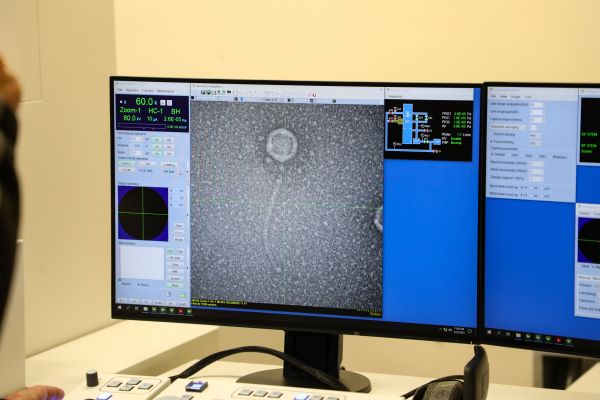
SCOPES is a educational training program that will bring science to life in rural communities by providing classrooms with meaningful hands-on, authentic research experiences and access to state-of-the-art electron microscopy. Through phage discovery classroom research, engaging curriculum, intensive professional development opportunities for teachers, interactive academies, and community outreach events, SCOPES will foster a culture of scientific inquiry and discovery, inspiring the next generation of rural scientists, engineers, and innovators.
Students will connect with industry leaders and role models as they engage in publishable scientific research to help them envision a career in STEM. Both connection with meaningful role models, and practical, hands on experience have been shown to meaningfully inspire young researchers as they grow.
What outcome will SCOPEs have?
In line with Ripple’s greater mission and vision to increase scientific literacy among Montana’s citizenry, SCOPES will aim to increase the trust in science that many rural communities have lost in the wake of Covid-19 and as the digital divide increases. As the world moves online, it is easier than ever for young students to begin feeling as though they have lost touch with the world around them.
For this reason, it is crucial for hands-on training and education for Montana students through programs, like SCOPES, be made available so students can once again begin making connections between where they live and the positive impact they can have on the world.
We’ve included a short compilation of testimonials from our PHAGES program below to give an example of the impact we hope to have.
PHAGES Symposium Presentations
Ripple’s PHAGES program culminated in a symposium in 2024 where participants in the program presented their PHAGES research to their peers, you can watch those videos below.
SEPA → INBRE Biomedical Pipeline
Undergraduates:
Hannah Sparks, Montana Tech – INBRE Summer Undergraduate, Research Fellow
Autumn Lineback, Montana Tech—SEPA/INBRE Research Scholar*
*Former BRIC student at Billings West High School
High School Students:
Erin Fogarty, Butte High School/Montana Tech—SEPA/INBRE Research Scholar*
*Former BRIC student at Butte High School
Bo Rost, Baker High School/Montana Tech—SEPA/INBRE Research Scholar*
*Former BRIC student at Baker High School
Kenna White, Butte High School/Montana State University—SEPA/INBRE Research Scholar


